
Okay, so check this out—logging into an exchange feels like second nature until it doesn’t. Seriously? One minute you’re breezing through, the next you’re blocked by 2FA, or an email you never got, or somethin’ odd with a device check. My instinct said this would be straightforward, but then I hit a couple of quirks that made me pause. Wow! If you trade regularly you’ll appreciate a no-nonsense walkthrough and some trade-tested tips about okx that actually save time and headaches.
First impressions: the OKX web interface is clean, fast, and modern. At launch it can be a little… polished, maybe too polished—some things hide behind icons. Initially I thought “great, minimal UI,” but then realized less obvious buttons can cause bigger slowdowns when you’re in a hurry. On one hand the layout helps you focus. On the other, it sometimes buries settings you need mid-trade.
Here’s the practical login flow that I use and recommend—simple steps, in order, and what to watch out for: create your account (email or phone), verify identity if you plan to trade more than small amounts, enable 2FA, add a trusted device, and finally check withdrawal whitelist options. Hmm… sounds banal, but missing one item can cost you hours. Also, don’t forget to bookmark the real login page—phishing is real and aggressive.
Check this out—if you want to jump straight to a clean guide for accessing the OKX web login, this link is what I use: okx. It’s concise, and it saved me a wasted support ticket once when I couldn’t find the right page (oh, and by the way—save screenshots of key verification steps; they come in handy).
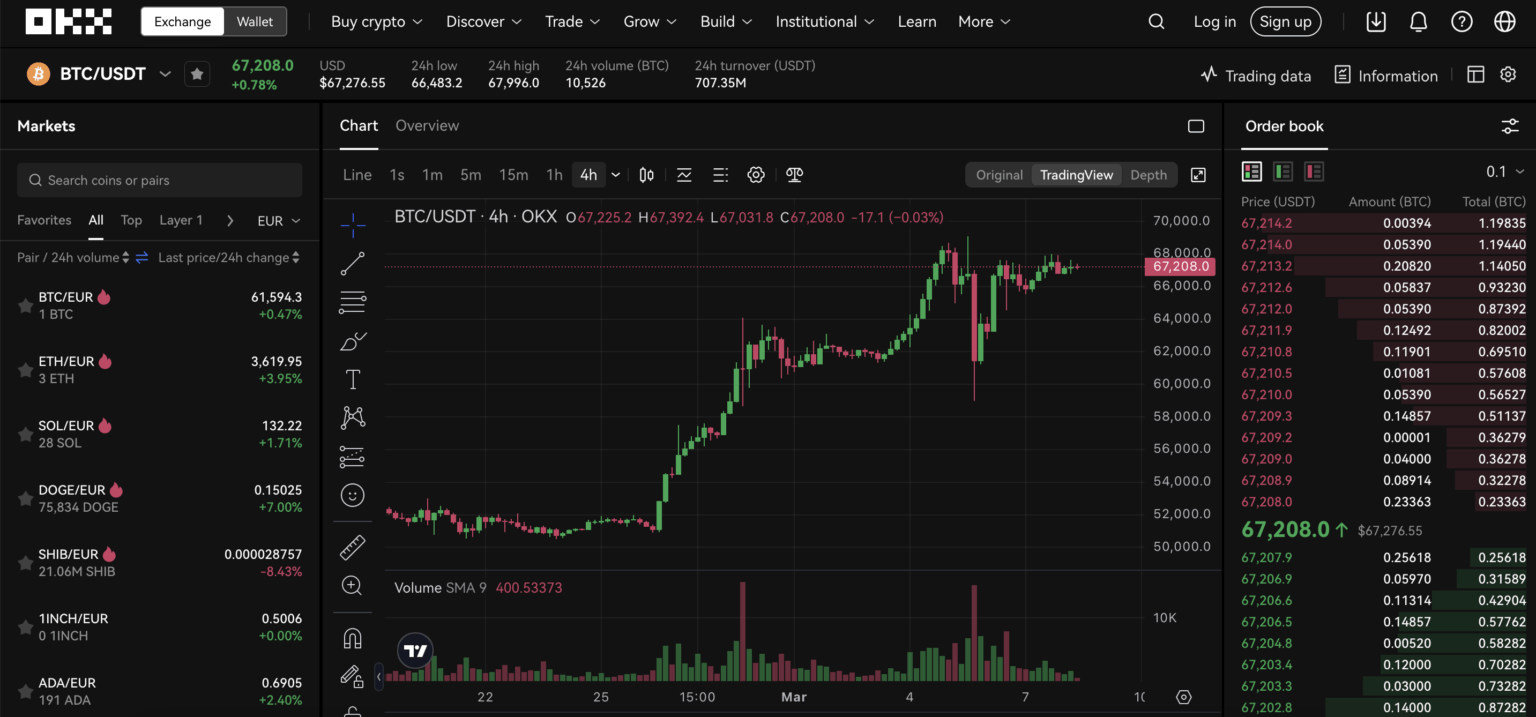
Step-by-step: logging in without the drama
Step 1 — Pick your sign-in method. Email is common; phone is faster for some people. Personally I’m biased toward email for account recovery, though phone 2FA can speed things up. Something felt off about relying only on SMS for 2FA—it’s convenient but a bit fragile when you travel or change numbers.
Step 2 — Password hygiene. Use a strong password manager, don’t reuse passwords, and please don’t keep your main wallet keys in the same place. Seriously? You’d be amazed how often traders get sloppy after a winning streak. My instinct says: rotate passwords occasionally. On the other hand, rotating too often leads to sticky notes and that’s worse.
Step 3 — Two-factor authentication. Do it. Prefer an authenticator app (TOTP) over SMS. Set up backup codes and store them offline. Initially I thought the backup codes were overkill, then I lost my phone and those codes were the only thing that prevented a support nightmare. Actually, wait—let me rephrase that: the backup codes were a lifesaver. If you use hardware keys (U2F/WebAuthn), even better.
Step 4 — Identity verification (KYC). If you’re trading spot only with small sums you might delay KYC, but withdrawals and margin often require it. On one hand KYC adds friction; on the other, it speeds up recovery if your account gets locked. I’m not 100% pleased about privacy tradeoffs, but it is what it is when you want full platform access.
Common hiccups and how I fix them
Session timeouts mid-trade — extend your session only on secure machines, not public ones. If you get logged out unexpectedly, clear cookies or try an incognito window to see if an extension is interfering. Something that bugs me: browser extensions (price trackers, script blockers) can subtly break the login UI. Disable them temporarily and retry.
2FA problems — lost phone? Use backup codes or contact support with proof. Prepare for a small wait. My advice: plan ahead; don’t treat recovery as an afterthought. Also, double-check device time sync for TOTP apps (if clock is off you’ll get rejected codes).
Blocked IP or region restrictions — some VPNs trigger risk flags. If you travel a lot, add a trusted device and enable withdrawal whitelist if available. On one occasion I was flagged simply because I logged in from an airport in a different state—embarrassing and slow. So yeah, whitelist where sensible.
Unrecognized device prompts — allow them if you know the device, otherwise pause. Something felt off about a prompt from a new browser? Trust your gut. If anything looks phishy—stop and investigate.
Security hardening: trade-grade checklist
– Use a reputable password manager and long, unique passwords.
– Enable TOTP (Google Authenticator, Authy, or a hardware key).
– Store backup codes offline (not in cloud notes).
– Activate withdrawal whitelists for main wallets.
– Keep software and browsers updated.
– Monitor account activity daily if you trade actively—set alerts.
Something else: consider splitting funds across an exchange account and cold storage. I know, obvious. But when you’re juggling leverage and spot positions, the easiest path to trouble is having everything in one place. My risk tolerance is not huge, so I keep only working capital on exchanges.
Mobile vs web: pros and cons
Web perks: larger interface, faster charting, better multi-window workflow for desktop traders. Mobile perks: quick access, push 2FA, and often a simpler recovery path. For active trading I prefer desktop. For quick checks and small trades, mobile is clutch. On balance, I use both; the web for execution and mobile for alerts and smaller moves.
Pro tip: sync notification settings—don’t get slapped with the wrong alert at midnight. Also, if you have the app, set up biometric unlock for speed, but keep your main security layers (2FA + passwords) intact. Double up, not down.
When you need support — handle it like a pro
Document everything before you submit a support ticket: screenshots, timestamps, device info, IP (approximate), and a concise narrative. Support teams move faster when you give them clear, reproducible details. On one support case I filed, a single annotated screenshot cut the resolution time in half—true story.
Also, don’t flood them with repeated tickets. Wait for a response, escalate politely if needed, and use social channels only as a last resort. I admit I’ve vented in a Discord once—felt good at the moment, but that didn’t fix my verification hold.
Frequently asked questions
Q: Can I use the same OKX account on multiple devices?
A: Yes, but register devices you frequently use, enable trusted device settings where possible, and expect occasional re-authentication. If you see unknown devices listed—remove them and rotate credentials.
Q: What’s the safest 2FA method for OKX?
A: A hardware security key (WebAuthn/U2F) is the strongest, followed by authenticator apps (TOTP). SMS is better than nothing but less secure—especially if your carrier account can be ported.
Q: I’m locked out after too many attempts. What now?
A: Use backup codes or the account recovery path. Prepare ID and verification materials before contacting support to speed up the process. Be patient—fraud checks can take time.