
Here’s the thing. I started using Solana explorers to chase down weird NFT transfers. Really, it changed how I think about on-chain transparency. At first it was just curiosity — I wanted to verify a sale and trace provenance through transaction logs because the marketplace UI was acting oddly and my gut said the hash didn’t add up. Initially I thought explorers were only for devs and auditors, but then I realized they’re the primary tool for everyday users who want accountability and to understand where their NFTs actually live.
Whoa! A good explorer puts the blockchain data in human terms. It shows signatures, the accounts involved, and the exact program calls that ran. When you can inspect inner instructions and parse logs, you stop guessing and start knowing. That clarity turned a confusing “where’d my NFT go?” into a five-minute forensic task, and I still remember the relief when the mystery resolved — somethin’ like finding a needle in a haystack, but way faster.
Really? You can actually read program logs. Yes — and that matters. Transaction errors are rarely intuitive from a UI message alone. Often the failure is buried in a program assertion or an account constraint; explorers expose those lines so you can act instead of flounder. This is where users avoid repeating mistakes and where devs fix edge cases that otherwise become recurring bugs.
Hmm… tools differ a lot. Some explorers prioritize aesthetics and charts, while others surface raw data and instruction parsing. On one hand, pretty visuals help product folks and collectors understand market trends; though actually, wait—let me rephrase that—raw logs empower developers and power users who need step-by-step traces. The truth is you want both: context for human decisions and the low-level traces for troubleshooting complex failures.
Here’s the thing. For NFT tracking you need at least three capabilities. You want to follow token transfers via SPL token records. You want metadata access so you can confirm which mint corresponds to a collection or rarity. And you want marketplace traces to see how price discovery actually unfolded, not just the final sale price. Put those together and you get provenance, and provenance beats rumor every time.
Seriously? Marketplaces can be opaque. Yep — sometimes a trade is marked as “marketplace sale” but the explorer shows a program-to-program handoff and a temporary escrow account in the middle. That detail is the difference between believing a rare drop sold on a public marketplace and discovering it serendipitously moved through a custom escrow. For collectors, that distinction affects both valuation and trust.
Okay. For practical debugging, start with the signature. Then examine the timestamp and the block height. Look at the “pre” and “post” balances to understand lamport movements and rent exemptions. Next inspect inner instructions and program logs; they often include custom error codes or debug prints that point directly to the failing assertion or missing signer. If you follow those steps you won’t miss the root cause — I promise it helps more than you think.
Wow! Side note: RPC inconsistencies can make things messy. Different RPC providers can return slightly different indexing states or lag on confirmed blocks. I’ve hit a case where an NFT transfer showed on one node but not another for several minutes, which is maddening when you need finality. Switching RPC endpoints or requerying with higher commitment often clears up the discrepancy, but it’s a gotcha that bugs me when I’m troubleshooting under time pressure.
Hmm… privacy concerns pop up too. Explorers are public by design, so they reveal transaction graphs tied to wallet addresses. That transparency is great for verification, though it also means you should never assume a wallet is anonymous. If privacy is a priority, consider using disposable addresses or on-chain mixers where appropriate, and be mindful that explorers keep a long memory. I’m not 100% sure about every privacy solution’s legality or efficacy, but the general principle stands: public ledgers are literal public records.
Here’s the thing. When tracking NFTs, metadata is king and metadata can live off-chain. Many collections host JSON files on IPFS or centralized servers, which means the explorer must fetch and cache that data. If an explorer fails to show artwork or attributes, the issue might be an off-chain host outage rather than an on-chain problem. Check the mint’s metadata URI and ping the content delivery layer before assuming the blockchain hid something from you.
Really? Some explorers also track floor prices and collections. Yep, they aggregate marketplace events and surface trends like volume, last sale, and floor movement over time. Those features are useful, but they can be laggy or inconsistent across platforms because of differing indexing heuristics. If you rely on floor prices for offers or bids, cross-check and watch for outliers; sometimes an outlying sale temporarily skews calculated floors.
Whoa! If you’re a developer, the explorer becomes a debugger. You can replay the exact instruction stream, see account state before and after, and capture sysvar changes. That visibility means you can pin down memory layout issues, account size mismatches, or deserialization errors. For on-chain programs that interact with token metadata or metadata programs, those logs are often the only readable breadcrumbs you get.
Here’s the thing. I once traced a failed airdrop where 300 recipients missed tokens. At first I thought the distributor’s script had botched the token decimals; initially I thought it was a tiny math error. But then I realized the distributor had used the wrong associated token account for a tranche, and the program silently skipped accounts that didn’t exist. It was a classic “edge case in the loop” bug and the explorer logs pointed directly at the missing ATA creation step. Took an hour to diagnose and a quick fix for future runs — lesson learned the hard way.
Hmm… user interfaces matter, but API access matters more for heavy workflows. If you want to bulk-check hundreds of signatures or track transfers programmatically, look for an explorer with a well-documented API or CSV export. Some explorers even allow webhooks for new events, which is invaluable for bots and indexers that need near real-time updates. I’m biased, but those integrations save days of manual work.
Wow! A nitpick: token decimals and mint representations confuse newbies. NFT mints often have decimals set to zero, but fungible tokens use decimals for balances, and the explorer must apply that formatting consistently. If a platform displays raw lamports or base units, you’ll misread balances. Good explorers translate units, show token icons, and annotate mints with collection links — small things that save headaches.
Here’s the thing. Performance under load is a real differentiator. Solana’s throughput means explorers need robust indexing pipelines and scalable RPC backends. When a major drop or marketplace event happens, some explorers lag behind, while others keep up with minimal delay. That latency affects everything from analytics dashboards to NFT floor watchers and can lead to missed opportunities in fast markets.
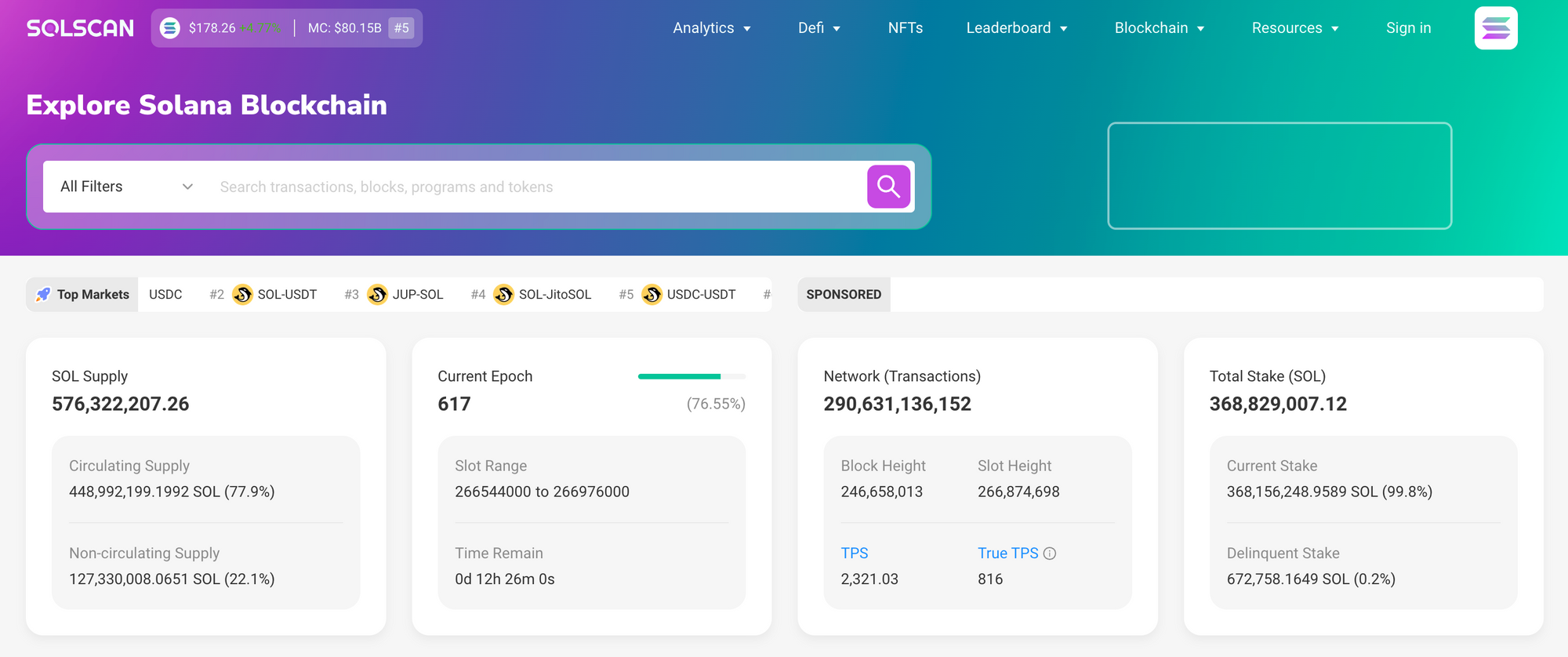
Okay. If you’re exploring right now, try these tips: use the signature search, filter by program, and inspect inner instructions. Watch for the “log” output and read error codes verbatim. When in doubt, compare the “pre” and “post” account states to see which balances or ownership flags changed. And if you need a solid, user-friendly tool that still exposes detailed traces, check out solscan — it balances clarity with depth and helped me more than once when a transaction looked inexplicable.
Power-user tricks and caveats
Seriously? Yes — there are tricks that make explorers far more useful. Use program filters to isolate marketplace interactions and ignore wallet-to-wallet noise. Look for events tied to the metadata program to identify collection-level actions. Follow the token account addresses rather than the mint when ownership is transferred through intermediate accounts. Be careful with cross-platform naming; two explorers may label the same program slightly differently, which can be confusing if you’re switching contexts while debugging.
Here’s the thing. Indexing heuristics vary across tools. Some explorers infer collection membership by creator addresses, while others rely on off-chain registries or verified badges. On one hand that improves discoverability; though on the other, inference can mislabel edge-case mints. If provenance matters — for audits, legal questions, or high-value trades — double-check the raw mint metadata and transaction history rather than trusting automated tags.
FAQ
How do I find a failed transaction’s root cause?
Start with the transaction signature, inspect the inner instruction logs, and read any program error messages. Check pre/post account balances and verify whether an associated token account existed or rent-exempt thresholds blocked a write. If nodes disagree, switch RPC endpoints and re-query with confirmed commitment to rule out indexing lag.
Which explorer should I use for NFT tracking?
I’m biased, but pick one that shows mint metadata, ownership history, and market traces. Tools like solscan combine those features with developer-friendly logs, making them a good first stop for both collectors and devs.